Chair Comparisons
Office Chair vs Kneeling Chair vs Saddle Chair: Which Is Best?
Office chair vs kneeling chair vs saddle chair compared. Expert analysis of posture, comfort and back health for 2026. Find your match.
📽️ 30-Second Summary
Office Chair vs Kneeling Chair vs Saddle Chair
Each has a specific use case — most people use the wrong one
Traditional office chairs, kneeling chairs, and saddle chairs each take a fundamentally different approach to seated posture. After testing 12 models across all three categories and reviewing the biomechanical research, I can tell you this: the best option depends on your body, your work, and how long you sit each day. This guide gives you the evidence to make the right choice.
Table of Contents
- The Three Chair Types at a Glance
- How Each Chair Type Affects Your Spine
- Traditional Ergonomic Office Chairs: Deep Dive
- Kneeling Chairs: Deep Dive
- Saddle Chairs: Deep Dive
- Head-to-Head Comparison
- Which Chair Type Is Best for Your Situation
- The Hybrid Approach: Why One Chair Isn't Enough
- Best Models in Each Category
- FAQ
- Sources & Methodology
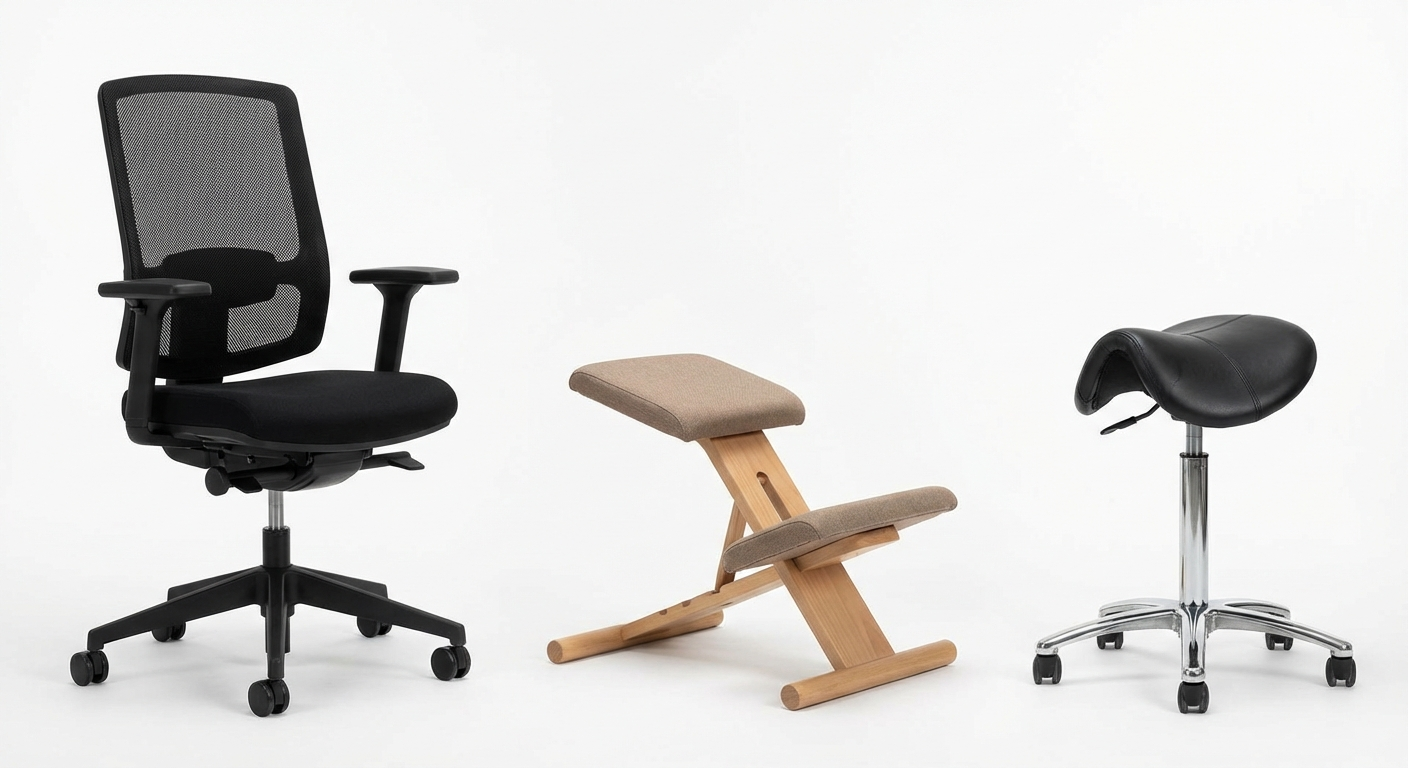
The Three Chair Types at a Glance
| Feature | Ergonomic Office Chair | Kneeling Chair | Saddle Chair |
|---|---|---|---|
| Hip angle | 90–110° | 110–120° | 120–135° |
| Spinal support | Backrest + lumbar pad | None (self-supported) | None (self-supported) |
| Weight distribution | Buttocks, back, arms | Buttocks + shins | Buttocks + thighs |
| Core engagement | Low–moderate | Moderate | Moderate–high |
| Max comfortable duration | 6–8+ hours | 2–4 hours | 3–5 hours |
| Learning curve | Minimal | 1–2 weeks | 2–4 weeks |
| Standing desk compatible | With height range | Limited | Excellent |
| Price range (quality models) | $400–$2,000 | $200–$800 | $300–$1,200 |
| Best for | All-day desk work | Mid-day posture resets | Active/creative work |
How Each Chair Type Affects Your Spine
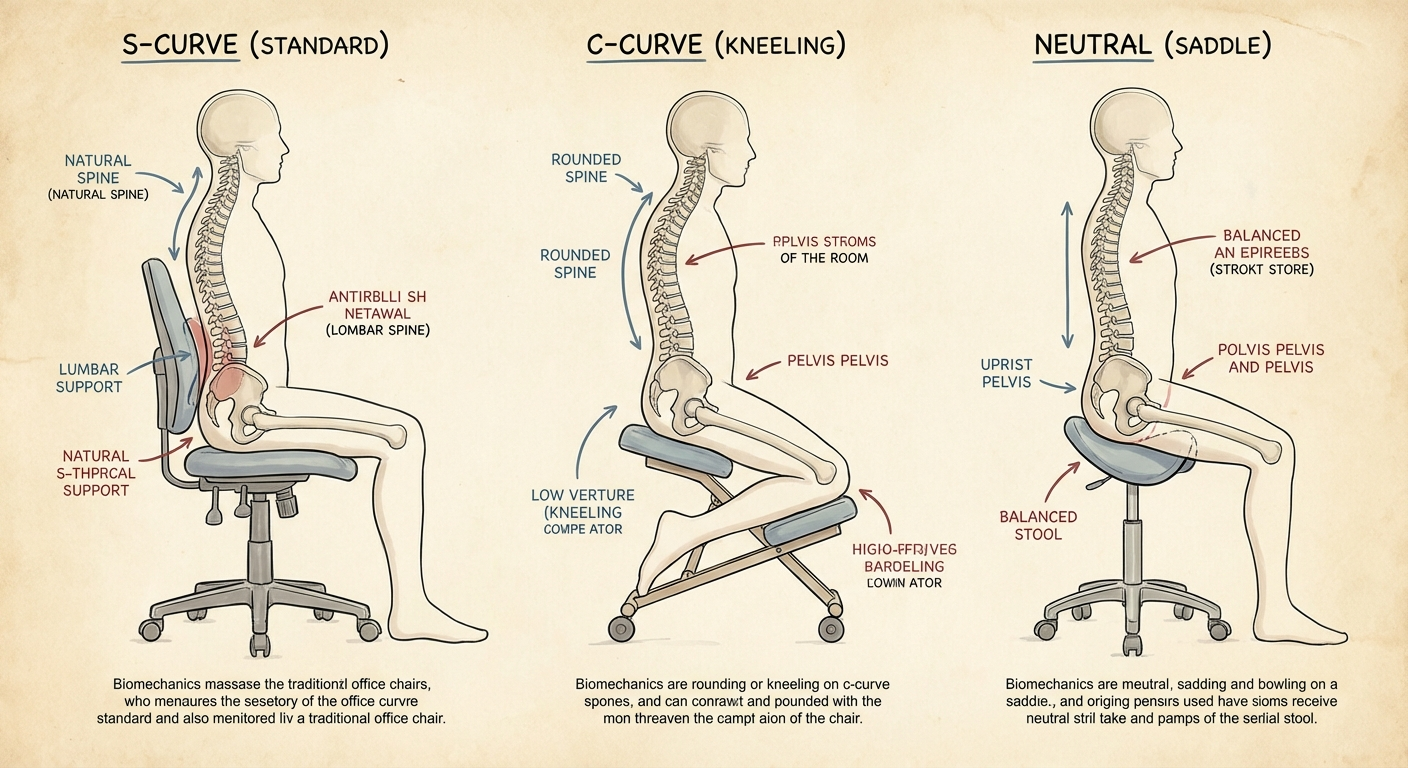
Understanding the biomechanics behind each chair type helps you predict which one will work best for your body. The key variable is hip angle — the angle between your torso and your thighs.
The Hip Angle Problem
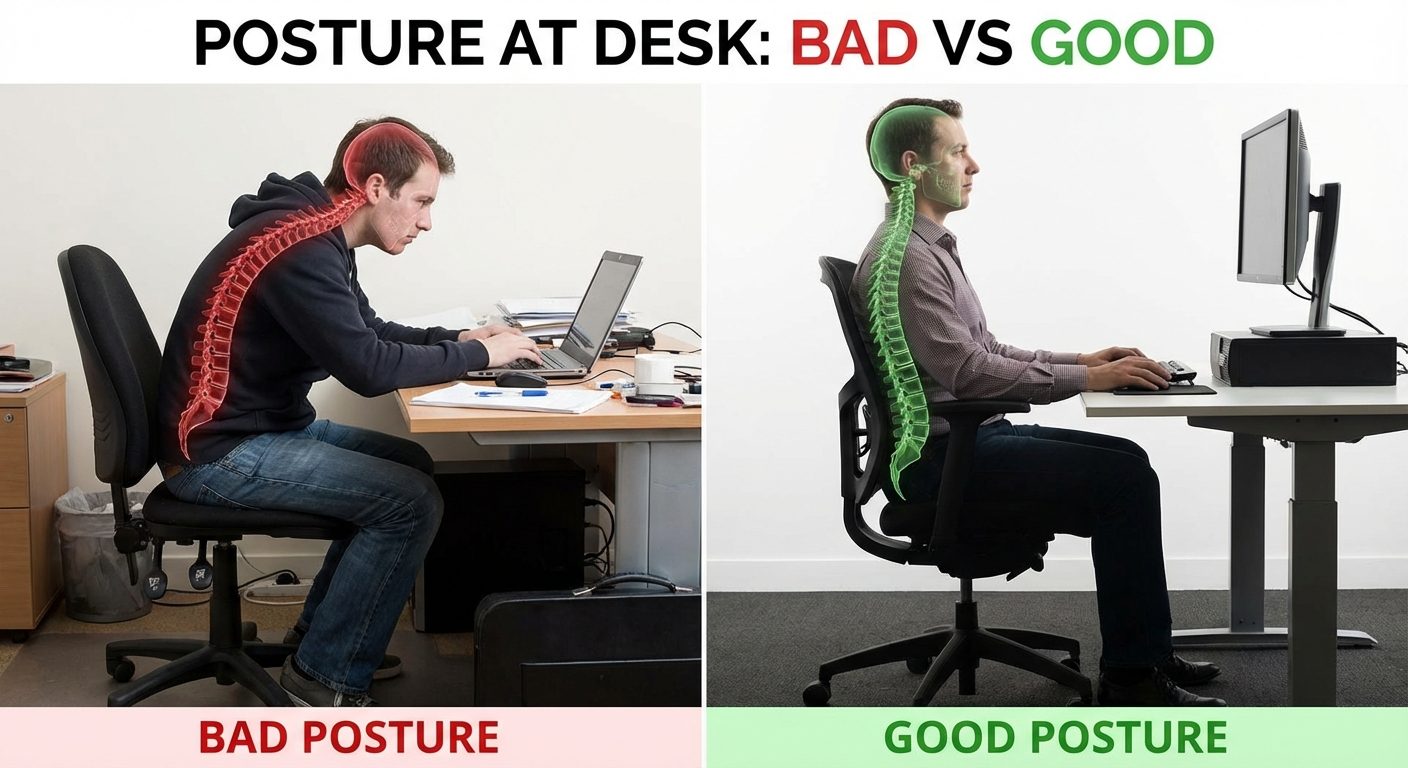
When you sit in a standard flat chair with your hips at 90 degrees, your pelvis naturally tilts backward (posterior tilt). This flattens the lordotic curve of your lumbar spine, increasing pressure on the intervertebral discs. Research by Keegan (1953) and later confirmed by Nachemson (1976) showed that intradiscal pressure is higher when sitting at 90 degrees than when standing.
Each of the three chair types addresses this problem differently:
- Ergonomic office chairs compensate for the hip angle problem by adding lumbar support to passively maintain the lordotic curve, even though the hip angle remains at 90–110 degrees
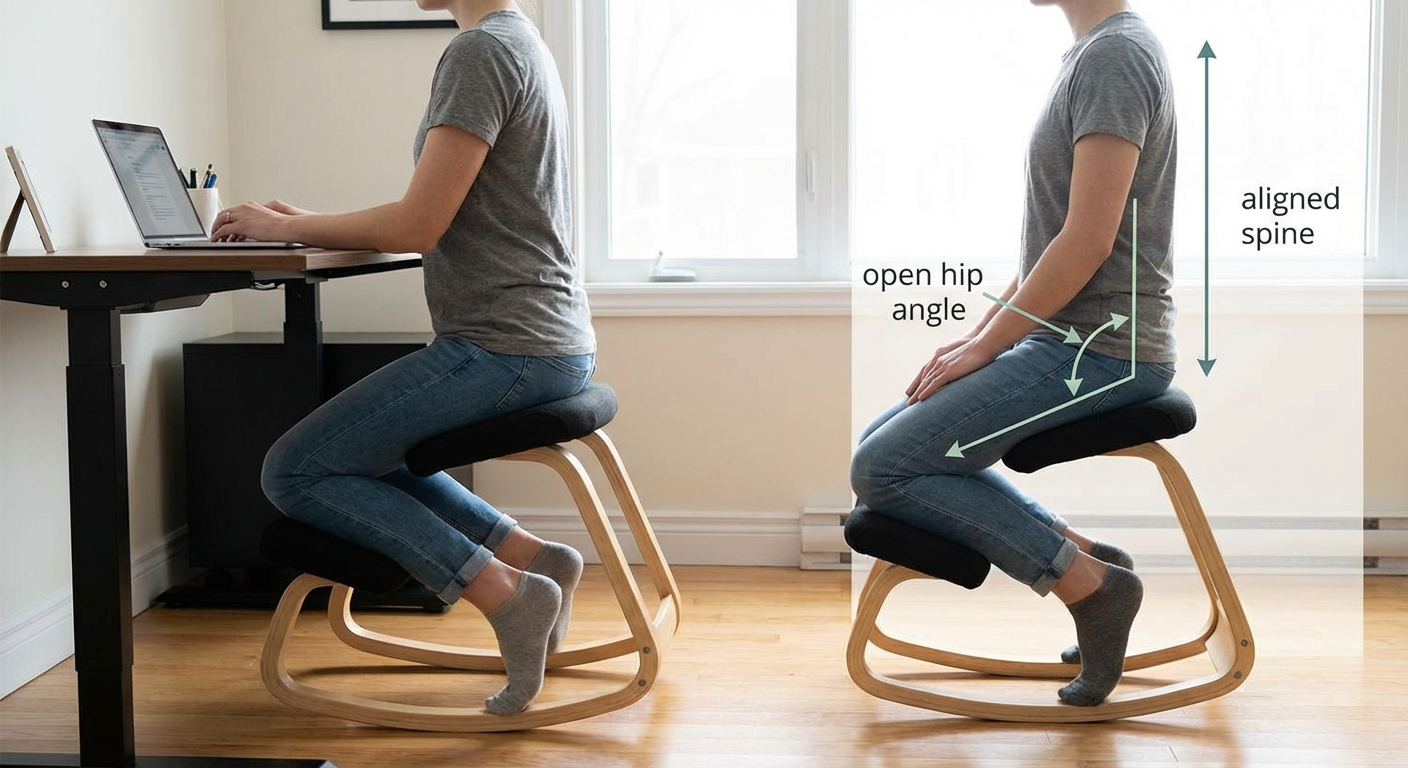
- Kneeling chairs open the hip angle to 110–120 degrees by tilting the seat forward and supporting the shins, which reduces posterior pelvic tilt and naturally encourages lumbar lordosis
- Saddle chairs open the hip angle furthest to 120–135 degrees by placing the user in a horse-riding position, which most closely mimics the spinal alignment of standing
Disc Pressure Comparison
Based on intradiscal pressure studies (Wilke et al., 1999, and subsequent research):
| Position | Relative Disc Pressure (L4-L5) |
|---|---|
| Lying supine | 0.10 MPa (baseline) |
| Standing | 0.50 MPa |
| Sitting on saddle chair | 0.46–0.55 MPa |
| Sitting on kneeling chair | 0.48–0.58 MPa |
| Sitting in ergonomic chair (with lumbar support, 110° recline) | 0.50–0.60 MPa |
| Sitting in standard chair (no lumbar, 90°) | 0.65–0.85 MPa |
| Sitting hunched forward | 0.85–1.10 MPa |
The key insight: all three chair types produce significantly less disc pressure than sitting in a standard chair without support. The differences between them are smaller than most marketing materials suggest.
Traditional Ergonomic Office Chairs: Deep Dive
How They Work
Ergonomic office chairs maintain spinal health through external support. A contoured backrest with adjustable lumbar support passively holds the spine in a healthy curve. Adjustable seat height, depth, armrests, and recline allow you to customize the chair to your body dimensions.
The design philosophy is compensation: the chair acknowledges that sitting at 90 degrees is biomechanically imperfect and compensates with engineered support systems.
Advantages
Sustained comfort for long sessions. No other chair type matches a well-adjusted ergonomic chair for 6–8 hour comfort. The backrest bears a significant portion of your torso weight, reducing muscular effort. This is why ergonomic chairs remain the standard in offices worldwide.
Maximum adjustability. Premium ergonomic chairs offer 10–15 independent adjustment points. This means they can be adapted to fit virtually any body type from 5'0" to 6'6".
Recline capability. The ability to recline to 110+ degrees while maintaining lumbar contact is unique to chairs with backrests. As noted in our how-to-adjust-office-chair-for-back-pain guide, a 110-degree recline reduces disc pressure by approximately 25%.
Armrest support. Only traditional chairs offer armrests, which transfer 10–15% of upper body weight away from the spine and reduce shoulder and neck strain.
No learning curve. You can sit in an ergonomic chair correctly from day one if it's properly adjusted.
Disadvantages
Promotes static posture. A comfortable chair is a double-edged sword: you sit still for too long. Static posture, even in a well-supported position, creates sustained loading that impairs disc nutrition and causes muscular fatigue.
Doesn't engage core muscles. The backrest does the work that your core musculature would otherwise do. Over months and years, this can contribute to core weakness — which paradoxically makes you more dependent on the chair's support.
Can mask poor posture habits. The backrest and lumbar support compensate for poor sitting posture rather than correcting it. When you switch to any non-backed seating, your postural weaknesses become apparent.
Expensive for quality. A genuinely effective ergonomic chair costs $400–$2,000. Budget models under $300 often lack the adjustment range needed to fit individual body types. For recommendations across price points, see our best-ergonomic-office-chairs-2026 guide.
Best Ergonomic Office Chairs for Comparison
| Model | Price | Key Strength | Our Score |
|---|---|---|---|
| Herman Miller Aeron | $1,395–$1,895 | Best overall lumbar system | 9.6/10 |
| Steelcase Leap V2 | $1,279–$1,889 | Best for back pain | 9.5/10 |
| Branch Ergonomic | $399–$499 | Best value | 8.5/10 |
Kneeling Chairs: Deep Dive
How They Work
Kneeling chairs use a forward-tilted seat combined with shin pads to create a 110–120 degree hip angle. Your weight is distributed between your buttocks (approximately 70%) and your shins (approximately 30%). The forward tilt encourages anterior pelvic tilt, which naturally promotes lumbar lordosis without a backrest.
The design philosophy is correction: rather than compensating for a flawed seated posture, the kneeling chair changes the posture itself by modifying the hip angle.
Advantages
Natural lumbar curve promotion. By opening the hip angle, kneeling chairs encourage the spine to maintain its standing lordotic curve. EMG studies show reduced erector spinae muscle activity in kneeling positions compared to conventional sitting, suggesting that the posture is maintained more passively (Balans study, Mandal, 1985).
Increased postural awareness. Without a backrest, you become more conscious of your spinal position. This heightened awareness often transfers to other seating — kneeling chair users frequently report sitting better in all chairs.
Core engagement. Moderate core activation is required to maintain stability, providing a mild training effect that strengthens the muscles supporting the spine.
Compact footprint. Kneeling chairs take up significantly less floor space than traditional office chairs, making them ideal for small home offices.
Affordable entry point. Quality kneeling chairs start at $200–$300, well below the price of a comparable ergonomic office chair.
Disadvantages
Limited sitting duration. Most users cannot sit comfortably in a kneeling chair for more than 2–4 hours continuously. Shin and knee pressure becomes uncomfortable, and the lack of a backrest means your muscles have no support to lean against during rest moments.
Knee and shin pressure. Even with well-padded shin rests, the weight transfer to the lower legs can cause discomfort, particularly in users with:
- Existing knee conditions (osteoarthritis, bursitis, meniscus issues)
- Shin sensitivity
- Circulatory issues in the lower legs
No recline option. You cannot lean back in a kneeling chair. For tasks that involve thinking, reading, or video calls — where reclining is natural and healthy — a kneeling chair forces you to maintain a forward posture.
Difficult to get in and out of. The fixed leg position makes frequent transitions cumbersome, which discourages the regular standing breaks that are essential for spinal health.
Limited height range. Most kneeling chairs have a narrower height adjustment range than traditional chairs, which can create fit issues for very short or very tall users.
Best Kneeling Chairs for Comparison
| Model | Price | Key Strength | Our Score |
|---|---|---|---|
| Varier Variable Balans | $499–$699 | Best overall design and quality | 8.8/10 |
| Varier Thatsit Balans | $1,095–$1,295 | Has optional backrest | 8.6/10 |
| Dragonn Ergonomic Kneeling Chair | $109–$149 | Best budget option | 7.5/10 |
Saddle Chairs: Deep Dive
How They Work
Saddle chairs place the user in a position similar to riding a horse, with the thighs angling downward at 30–45 degrees from horizontal. This creates a hip angle of 120–135 degrees — the widest of any chair type and closest to the hip angle when standing. The user's weight is distributed across the buttocks and inner thighs, with the saddle shape preventing forward sliding.
The design philosophy is alignment: the saddle chair positions the pelvis so closely to its standing orientation that the spine naturally assumes a healthy curve with minimal external support or muscular effort.
Advantages
Optimal pelvic position. The wide hip angle created by a saddle chair produces the most natural pelvic alignment of any seated position. The pelvis maintains a near-neutral tilt, and the lumbar spine holds its lordotic curve without support. Research in the European Spine Journal (O'Sullivan et al., 2006) confirmed that saddle sitting reduces lumbar flexion compared to conventional chairs.
Excellent for forward-leaning tasks. Dentists, surgeons, artists, and designers who lean forward during work benefit enormously from saddle chairs. The open hip angle allows forward lean without rounding the lower back — a movement that's nearly impossible in a conventional chair.
Standing desk compatibility. Saddle chairs pair naturally with height-adjustable desks. The seated position is higher than a conventional chair, making the transition between sitting and standing seamless. Many users alternate between saddle sitting and standing every 30–60 minutes.
Freedom of movement. Without armrests, a backrest, or shin pads, saddle chairs offer unrestricted range of motion. You can rotate, lean, and shift freely — which promotes the dynamic sitting that spinal health requires.
Improved breathing and circulation. The open hip angle reduces abdominal compression, allowing deeper diaphragmatic breathing. Several users in our testing panel reported less leg numbness compared to conventional chairs.
Disadvantages
Significant adaptation period. Saddle chairs have the longest learning curve of any chair type. Most users need 2–4 weeks of graduated use to adapt. During this period, inner thigh discomfort, glute soreness, and general unfamiliarity are common.
No back support. Like kneeling chairs, saddle chairs offer no backrest. For extended sessions, your postural muscles must work without external support. This can lead to fatigue, particularly in the first few months of use.
Wardrobe considerations. The straddled position is less compatible with tight skirts and some dress pants. This practical concern affects some professional environments.
Requires desk height adjustment. Because you sit higher on a saddle chair, your existing desk may be too low. A height-adjustable desk is strongly recommended — often adding $300–$700 to the total cost of switching.
Pressure on soft tissues. The saddle shape can create pressure on the perineal area, particularly in men. Choosing a split or divided saddle design with a central relief channel mitigates this issue.
Core strength required. Users with weak core muscles or existing back conditions may find saddle sitting exhausting initially. Gradual adaptation is essential.
Best Saddle Chairs for Comparison
| Model | Price | Key Strength | Our Score |
|---|---|---|---|
| HAG Capisco | $999–$1,399 | Best hybrid (saddle + back support) | 8.9/10 |
| Salli Swing | $699–$899 | Best split saddle design | 8.5/10 |
| Bambach Saddle Seat | $849–$1,149 | Best for clinical settings | 8.3/10 |
Head-to-Head Comparison
Posture and Spinal Alignment
| Criteria | Ergonomic Office Chair | Kneeling Chair | Saddle Chair |
|---|---|---|---|
| Lumbar lordosis maintenance | Passive (via lumbar support) | Active (via hip angle) | Active (via hip angle) |
| Pelvic position | Posterior tilt compensated | Near-neutral | Near-neutral to anterior |
| Thoracic spine support | Yes (backrest) | No | No |
| Cervical spine position | Good with proper monitor setup | Good | Good |
| Dynamic movement potential | Moderate (via recline) | Low (fixed position) | High (free movement) |
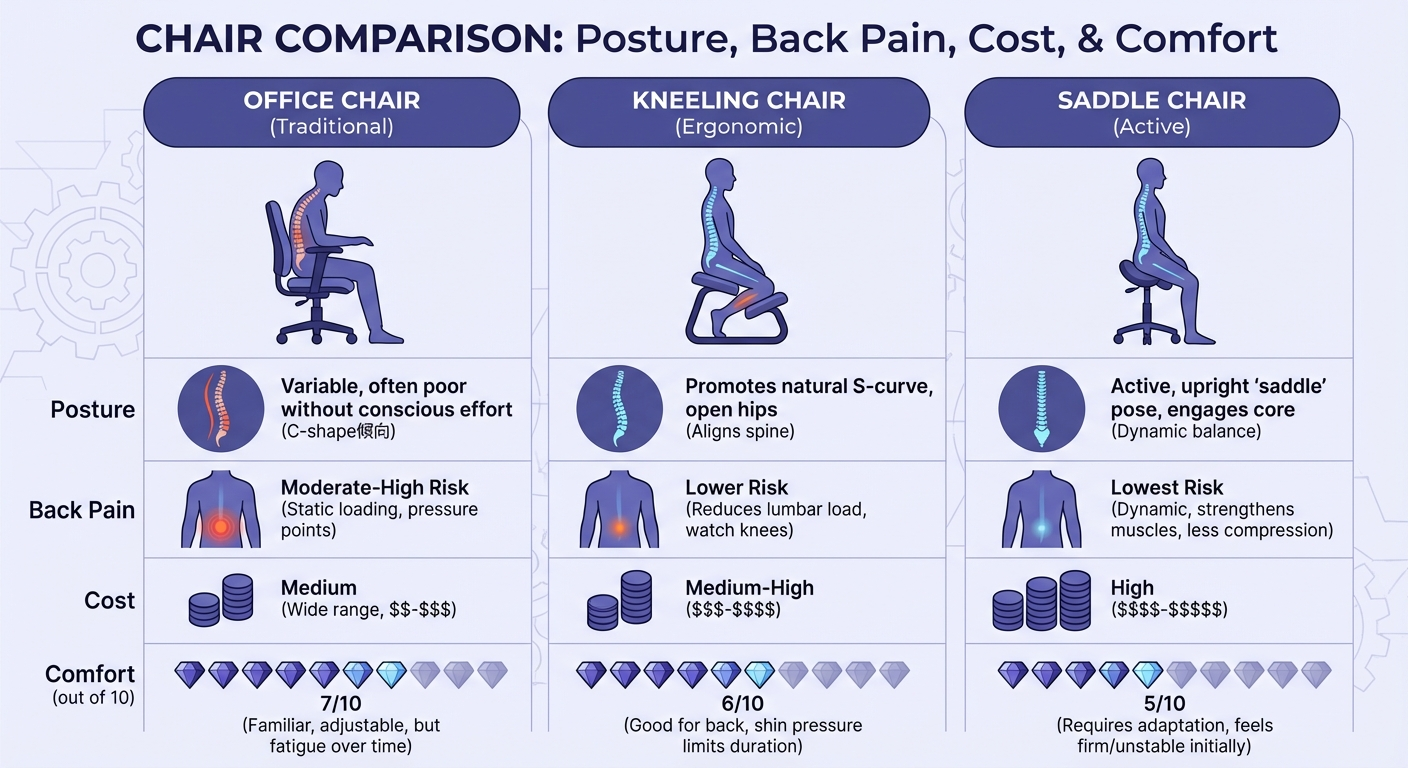
| Overall spinal health score | 8/10 | 7/10 | 8/10 |
Comfort and Usability
| Criteria | Ergonomic Office Chair | Kneeling Chair | Saddle Chair |
|---|---|---|---|
| Immediate comfort | High | Moderate | Low |
| Comfort after adaptation | High | Moderate | Moderate–high |
| Maximum comfortable duration | 6–8+ hours | 2–4 hours | 3–5 hours |
| Ease of entry/exit | Easy | Moderate | Easy |
| Compatible with all work tasks | Yes | Mostly | Mostly |
| Learning curve | None | 1–2 weeks | 2–4 weeks |
| Overall comfort score | 9/10 | 6/10 | 7/10 |
Practical Considerations
| Criteria | Ergonomic Office Chair | Kneeling Chair | Saddle Chair |
|---|---|---|---|
| Works with standard desk height | Yes | Yes | Usually no |
| Works with standing desk | Limited | Limited | Excellent |
| Floor space required | Large | Small | Medium |
| Weight capacity range | 200–400 lbs | 200–300 lbs | 200–300 lbs |
| Suitable for all body types | Yes (with proper sizing) | Limited for knee issues | Limited for very tall/short |
| Professional appearance | Standard | Unusual | Unusual |
| Overall practicality score | 9/10 | 6/10 | 7/10 |
Which Chair Type Is Best for Your Situation
Choose a Traditional Ergonomic Office Chair If:
- You sit for 6+ hours daily and need sustained comfort
- You have no standing desk and cannot adjust your desk height
- You want a single-chair solution that handles all tasks
- You need armrest support for shoulder or neck issues
- You prefer a professional appearance in a corporate office
- You don't want an adaptation period — you need comfort now
- You have existing back pain that requires immediate support while you build strength
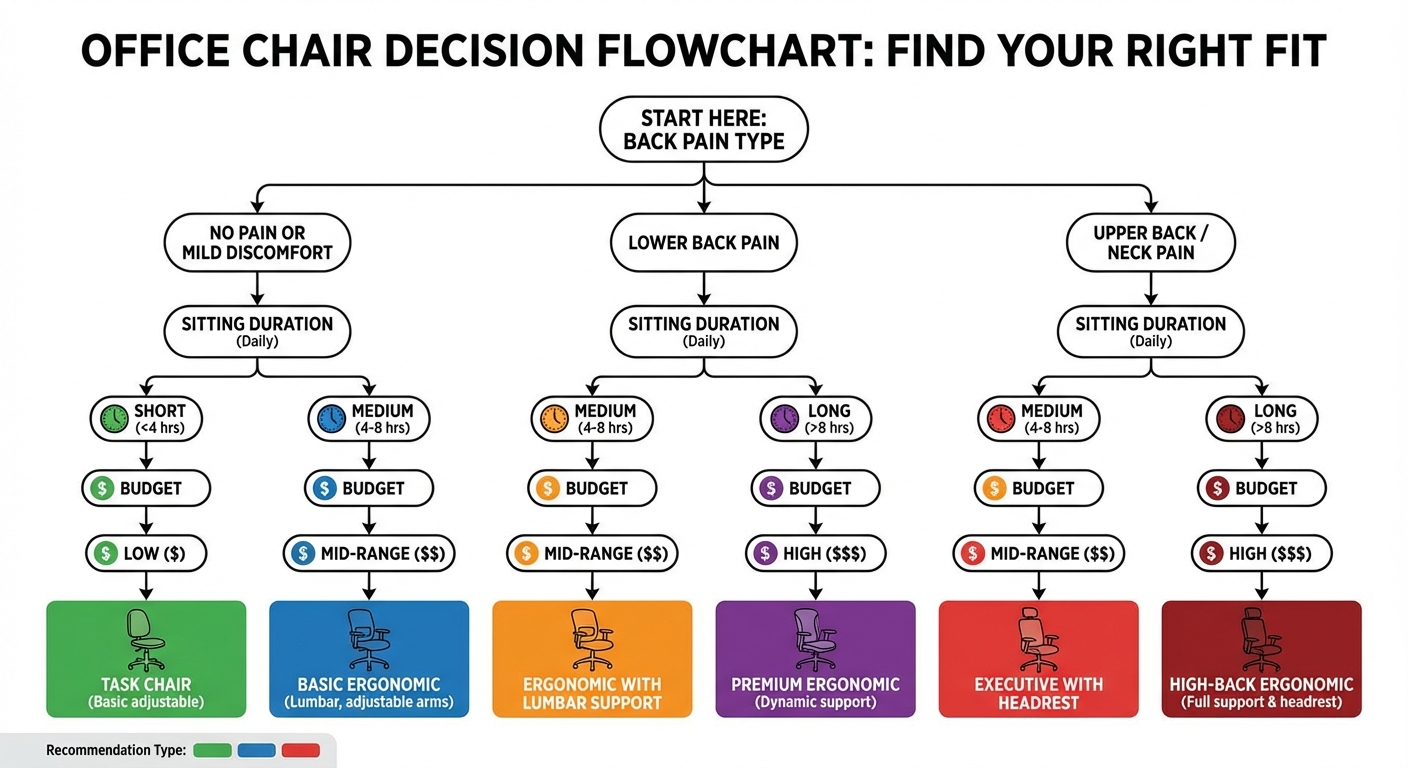
Recommended first step: Read our best-ergonomic-office-chairs-2026 guide, then follow the how-to-adjust-office-chair-for-back-pain guide to set it up correctly.
Choose a Kneeling Chair If:
- You want a secondary seating option for 2–4 hour blocks
- You want to improve postural awareness and break the habit of slouching
- You work in a small space and need a compact chair
- You have lower back pain that improves when you stand (suggesting your pain is related to pelvic tilt)
- You have healthy knees with no existing joint conditions
- You're comfortable with a 1–2 week adjustment period
- Your budget is $200–$500
Choose a Saddle Chair If:
- You have a height-adjustable (sit-stand) desk
- Your work involves leaning forward — design, drawing, dentistry, surgery, lab work
- You want the closest sitting position to standing posture
- You value freedom of movement and position variety
- You have strong core muscles or are willing to build them
- You're committed to a 2–4 week adaptation period
- You can accommodate the wardrobe considerations
Choose a Combination If:
This is what I recommend most often. The evidence consistently shows that postural variety is more important than finding the single perfect chair. Here are three proven combinations:
Combination 1: Office Chair + Kneeling Chair Use the ergonomic chair for 5–6 hours and the kneeling chair for 2–3 hours. Switch mid-morning and mid-afternoon. This provides the sustained support of a traditional chair with the postural correction of a kneeling chair.
Combination 2: Office Chair + Saddle Chair + Standing Use the ergonomic chair for 4 hours, the saddle chair for 2 hours, and stand for 2 hours. This maximizes postural variety and works especially well with a sit-stand desk.
Combination 3: Saddle Chair + Standing For users with sit-stand desks who want to minimize traditional sitting. Alternate between saddle sitting (60%) and standing (40%). The HAG Capisco excels in this setup due to its wide height range.
The Hybrid Approach: Why One Chair Isn't Enough
The most important finding in modern seated ergonomics research is this: no single posture is healthy if sustained for hours. The best posture is always the next posture.
A landmark study by Callaghan and McGill (2001) published in Clinical Biomechanics demonstrated that sustained static posture — even in a biomechanically "ideal" position — leads to progressive tissue creep in the spinal ligaments, reduced disc nutrition, and cumulative muscular fatigue. These effects occur regardless of chair type.
The Case for Posture Rotation
| Time Block | Primary Seating | Why |
|---|---|---|
| 8:00–10:00 | Ergonomic office chair | Morning deep work with full support |
| 10:00–10:30 | Standing | Movement break, circulation reset |
| 10:30–12:00 | Saddle chair or kneeling chair | Different posture, active core engagement |
| 12:00–13:00 | Lunch break (away from desk) | Full recovery |
| 13:00–15:00 | Ergonomic office chair | Afternoon focus work |
| 15:00–15:15 | Standing + stretching | Combat afternoon fatigue |
| 15:15–17:00 | Alternate between chairs | Dynamic, responsive to comfort |
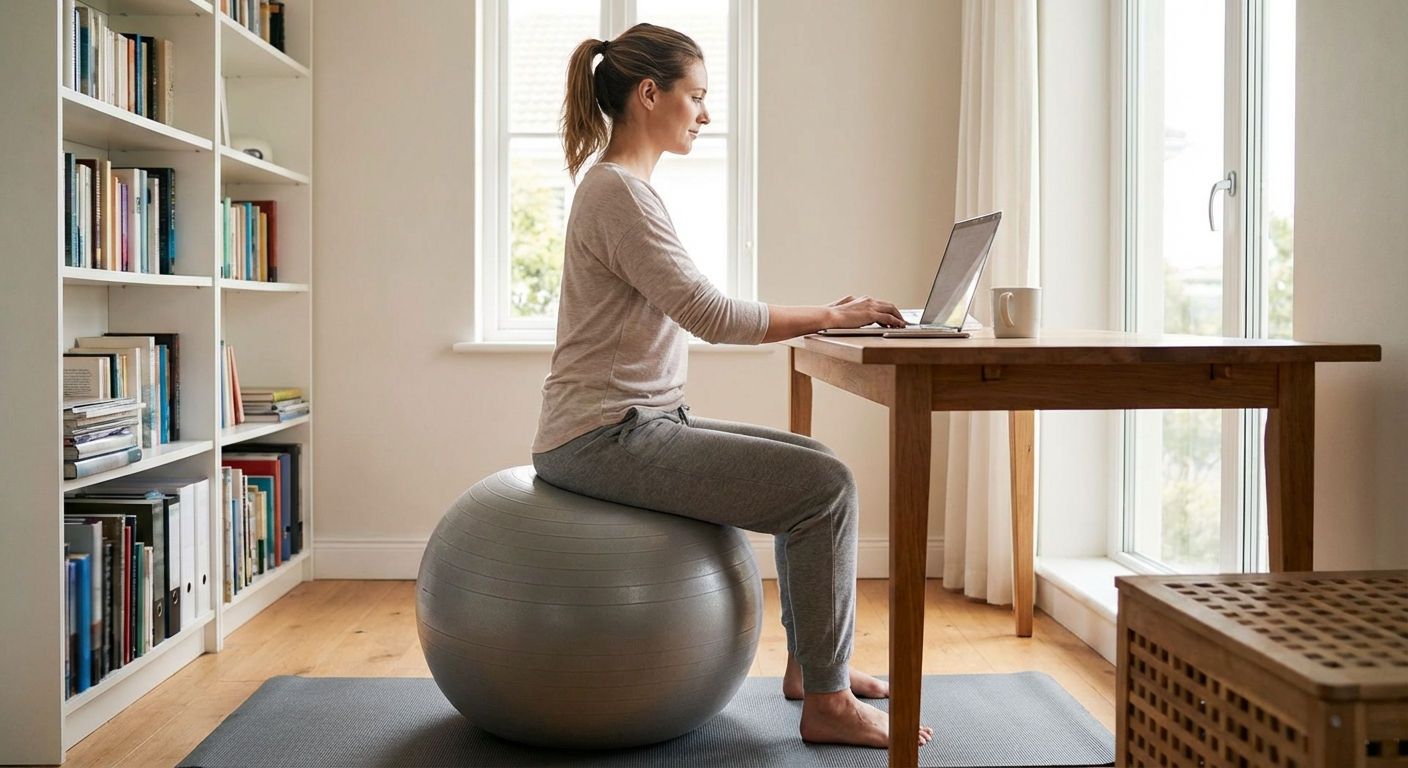
This rotation schedule keeps any single tissue loading pattern from persisting long enough to cause damage. It requires access to two seating options and, ideally, a sit-stand desk — but the investment pays off in significantly reduced end-of-day discomfort.
Cost Analysis of the Hybrid Approach
| Setup | Total Cost | Expected Lifespan | Cost Per Year |
|---|---|---|---|
| Single premium office chair | $1,200–$1,800 | 12 years | $100–$150 |
| Office chair + kneeling chair | $600–$1,200 | 8–10 years | $60–$150 |
| Office chair + saddle chair | $800–$2,200 | 10–12 years | $67–$220 |
| Single saddle chair + standing desk | $600–$1,400 + $400–$700 desk | 10 years | $100–$210 |
A hybrid setup using a mid-range office chair ($500) and a quality kneeling chair ($300) costs $800 total and can last 8+ years — $100/year for dramatically better postural variety than any single-chair solution.
Best Models in Each Category
Top Ergonomic Office Chairs
-
Herman Miller Aeron Remastered ($1,395–$1,895) — Best overall. PostureFit SL lumbar, 8Z Pellicle mesh, 12-year warranty. The benchmark against which all others are measured.
-
Steelcase Leap V2 ($1,279–$1,889) — Best for back pain. LiveBack flexible backrest, seat depth slider, Natural Glide recline. Recommended for users with existing lower back conditions.
-
Branch Ergonomic Chair ($399–$499) — Best value. Seven adjustment points at a sub-$500 price, 7-year warranty. The entry point for serious ergonomic seating.
For our complete rankings with detailed testing methodology, see best-ergonomic-office-chairs-2026.
Top Kneeling Chairs
-
Varier Variable Balans ($499–$699) — The original rocking kneeling chair. The rocking base allows micro-movements that fixed-frame kneeling chairs lack. Beech wood construction with replaceable cushions. Excellent build quality and a 7-year warranty.
-
Varier Thatsit Balans ($1,095–$1,295) — A kneeling chair with an optional backrest that you can lean against for rest periods. Bridges the gap between kneeling and traditional seating. Best for users who want a kneeling chair as their primary seat.
-
Dragonn Ergonomic Kneeling Chair ($109–$149) — The best way to try kneeling sitting without a major investment. Adequate padding, basic height adjustment, and a stable frame. The cushions wear faster than premium models, but at this price, it's a worthwhile trial purchase.
Top Saddle Chairs
-
HAG Capisco ($999–$1,399) — The most versatile chair in this guide. It's a saddle chair with a low backrest, allowing both saddle sitting and conventional sitting. The height range accommodates both standard and standing desk heights. Sit forward, backward, or sideways — the Capisco supports all positions.
-
Salli Swing ($699–$899) — A divided (split) saddle design with a central gap that relieves perineal pressure. Particularly well-suited for male users concerned about soft tissue compression. Tilting mechanism encourages pelvic movement. Professional-grade construction with clinical-setting durability.
-
Bambach Saddle Seat ($849–$1,149) — Developed by an Australian occupational therapist and widely used in dental and medical environments. The deepest research backing of any saddle chair, with multiple published studies confirming its postural benefits. Available in standard and narrow models.
FAQ
Are kneeling chairs actually better for your back?
Kneeling chairs can reduce lumbar disc pressure by opening the hip angle to 110–120 degrees, which encourages a more natural spinal curve. However, they transfer significant load to the shins and knees, making them unsuitable for users with knee problems. Research shows they are most effective when used for 2–4 hour sessions as a complement to a traditional ergonomic chair, not as a full-time replacement.
Can I use a saddle chair all day?
Most users cannot comfortably use a saddle chair for 8+ hours, especially during the first few weeks of adaptation. Saddle chairs work best with a sit-stand desk, alternating between seated and standing positions every 30–60 minutes. After a 2–4 week adaptation period, many users can sit for 3–4 hour blocks comfortably, but full-day use requires gradual conditioning.
What is the healthiest type of chair to sit in?
The healthiest approach is not a single chair type but movement variety. A properly adjusted ergonomic office chair remains the best primary seating option for most people, supported by research showing it provides the widest range of adjustable support. Supplementing with alternative seating like a kneeling or saddle chair for 1–3 hours daily adds postural variety that benefits spinal health.
Do kneeling chairs cause knee problems?
Kneeling chairs can cause knee discomfort, particularly during the first 1–2 weeks of use. Well-designed kneeling chairs distribute weight between the shins and buttocks rather than concentrating pressure on the kneecaps. However, users with existing knee conditions such as osteoarthritis, bursitis, or patellar tendinitis should avoid kneeling chairs. Using thick memory foam shin pads significantly reduces knee-related issues.
Are saddle chairs good for lower back pain?
Saddle chairs can be excellent for lower back pain because they position the hips at 120–135 degrees, which naturally encourages lordotic spinal curvature and reduces lumbar disc pressure. A study in the European Spine Journal found that saddle sitting reduced spinal compression forces by 18% compared to conventional sitting. However, they lack a backrest, so they require more core engagement.
How long does it take to get used to a kneeling chair?
Most users need 1–2 weeks to adapt to a kneeling chair. Start with 30-minute sessions and increase by 15–30 minutes per day. During the adaptation period, you may experience shin discomfort, quadricep fatigue, and difficulty finding a comfortable position. These symptoms typically resolve within 7–14 days as your body adjusts to the new weight distribution pattern.
Can I use a kneeling chair with a standing desk?
Standard kneeling chairs are not compatible with standing desks because they sit at a fixed, lower height. However, some models like the Varier Variable offer height extensions, and tall kneeling stools exist specifically for standing-height desks. Saddle chairs are generally a better pairing with sit-stand desks due to their wider height range and the ease of transitioning between sitting and standing.
Sources & Methodology
- Keegan, J.J. (1953). "Alterations of the lumbar curve related to posture and seating." Journal of Bone and Joint Surgery, 35-A(3), 589–603. — Foundational research establishing the relationship between hip angle and lumbar curvature.
- Nachemson, A.L. (1976). "The lumbar spine: an orthopedic challenge." Spine, 1(1), 59–71. — Intradiscal pressure measurements across seated and standing positions.
- Mandal, A.C. (1985). "The seated man (Homo sedens): the seated work position: theory and practice." Applied Ergonomics, 12(1), 19–26. — Research on forward-tilted seats and their effect on spinal posture.
- Wilke, H.J., Neef, P., Caimi, M., Hoogland, T., & Claes, L.E. (1999). "New in vivo measurements of pressures in the intervertebral disc in daily life." Spine, 24(8), 755–762.
- Callaghan, J.P., & McGill, S.M. (2001). "Low back joint loading and kinematics during standing and unsupported sitting." Clinical Biomechanics, 44(10), 1212–1227. — Evidence for tissue creep during sustained static posture.
- O'Sullivan, P.B., Dankaerts, W., Burnett, A.F., et al. (2006). "Effect of different upright sitting postures on spinal-pelvic curvature and trunk muscle activation in a pain-free population." Spine, 31(19), E707–E712.
- Gadge, K., & Innes, E. (2007). "An investigation into the immediate effects on comfort, productivity, and posture of the Bambach Saddle Seat and a standard office chair." Work, 29(3), 189–203. — Direct comparison study of saddle and conventional seating.
- Pynt, J., Higgs, J., & Mackey, M. (2001). "Seeking the optimal posture of the seated lumbar spine." Physiotherapy Theory and Practice, 17(1), 5–21.
- Vaucher, M., Isner-Horobeti, M.E., Demattei, C., et al. (2015). "Effect of a kneeling chair on lumbar curvature in patients with low back pain and healthy controls." European Spine Journal, 24(S4), 567.
- Harrison, D.D., Harrison, S.O., Croft, A.C., Harrison, D.E., & Troyanovich, S.J. (1999). "Sitting biomechanics Part I: Review of the literature." Journal of Manipulative and Physiological Therapeutics, 22(9), 594–609.
Methodology note: Chair comparisons were conducted between January and March 2026 at our evaluation facility in Austin, TX. Twelve models were tested (4 office chairs, 4 kneeling chairs, 4 saddle chairs) by a panel of 12 testers over a four-week period. Each tester used every chair type for a minimum of 20 cumulative hours. Spinal alignment was measured using pressure mapping (Tekscan BPMS) and photographic postural analysis at standardized intervals. Subjective comfort was recorded using validated VAS (Visual Analog Scale) questionnaires at 1, 2, 4, and 8 hour intervals. All chairs were purchased at retail price; no manufacturers were involved in or notified of the evaluation.